Art Supply List: Acrylic Painting Supplies for Canvas
This post contains affiliate links, which means I make a small commission at no extra cost to you. See my full disclosure here.
The start of a new year is the perfect time to pick up a new craft. If you have ever thought that you may like to try your hand at acrylic painting, there’s no time like the present! To help you get started on your painting journey, here is a complete guide to acrylic painting supplies. Whether you have been a painter for years and want to try out a few new products or you’re brand new to painting, you can find something useful here!
Acrylic Paints:
When it comes to acrylic paints, not all art supplies are created equally. There are several grades or levels of acrylic paints. The quality of the paint largely depends upon the types and concentration of pigments used to make them. Student quality paints often have less pigment while artist quality paints will have richer, high quality pigments. While you can make beautiful paintings with either grade, nothing beats a good quality acrylic paint set.
If you are a beginner or art student, Liquitex Basics are a student grade paint and are a great brand to start with! You can pick them up at your local Hobby Lobby and they are usually a very affordable price point. Here is a set of basics colors. I’d avoid those $1 craft paints for canvas/fine art painting. Only use those for crafting or painting wood. If artist quality paints are what you’re after, there is no brand name I’d recommend more than Golden Acrylics. They have lovely heavy body paints that act like traditional, thick paints. Golden also offers fluid acrylics which are a little thinner to work with. You can pick up a few tubes if you are looking for a specific color, but I’d recommend always having basic colors that you can use to mix pretty much any color of the rainbow. The same colors can be applied for watercolor paints or colors for your oil painting supplies.
Basic Acrylic Paint Colors to Keep on Hand:
-Titanium White
-Mars Black
-Cadmium Red Medium
-Cadmium Yellow Medium
-Phthalo Green
-Sap Green
-Phthalo Blue
-Burnt Umber
-Raw Sienna
Brushes/Tools:
When it comes to painting, almost anything can be a useful tool to have on hand. You can even finger paint with acrylics, but if you are steering your artistic endeavors towards traditional painting styles, there are a few tried and true tools you should have in your arsenal. A paint brush is the obvious choice, but there are several different shapes and types of brushes to choose from.
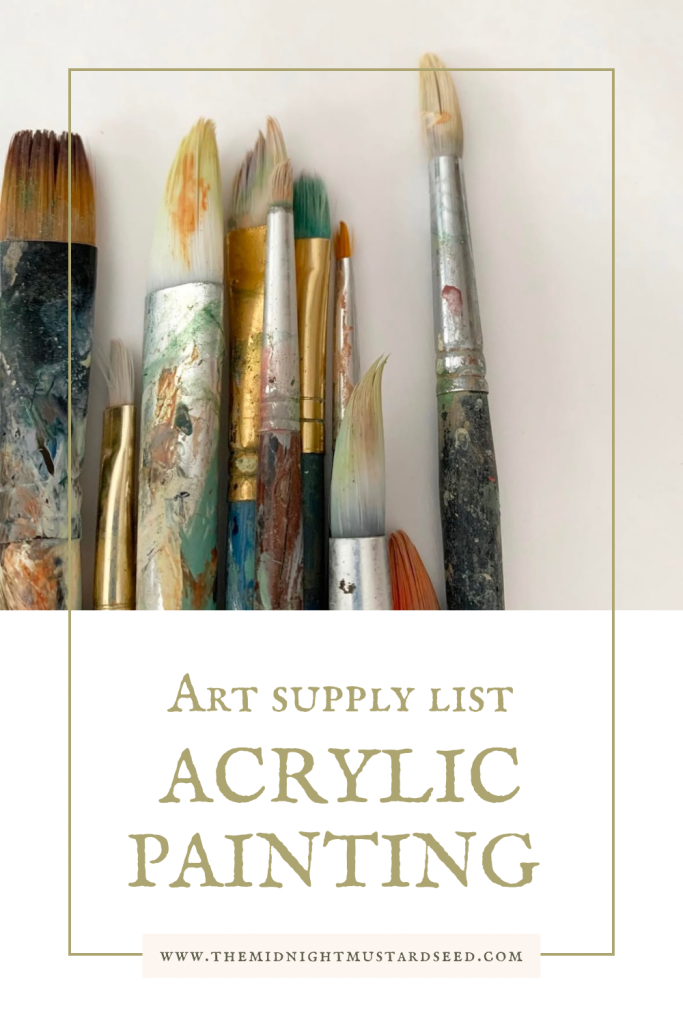
Synthetic hair paint brushes do extremely well with acrylic paints. You can always grab a cheap set to try out from your local craft store. If you are looking to upgrade your brushes to a higher quality set, I really love the Princeton Talkon Brushes. Synthetic bristles help you achieve a smooth result similar to the satiny look of oil paint. Rough or very dry bristle brushes are great for dry brushing effects such as painting grasslands. As far as paint brush shapes go, I’d recommend building a collection that has each shape in varying sizes. However, if cost is an issue, I’d grab a large flat brush, a medium and small round brush, a medium filbert, a small or medium angle brush, and one small detail brush.
A palette knife is a great tool to have if you are into creating impressionistic or textured works of art. Sponges are also a pretty universal tool to use whether you are sponge painting for texture or are just trying to achieve a simple color wipe on your painting surface.
Painting Tools List:
-synthetic brushes of all sizes and shapes( I love the Princeton Talkon series, but a generic set of cheap brushes from Hobby Lobby or Amazon works too!)
Primers/Mediums/Varnishes:
Canvas surfaces can often be too absorbent and wood panels can sometimes be rough. One necessity for preparing your surfaces is gesso. Gesso is essentially a very thick, white primer that helps to create a barrier between your paint and your painting surface. It helps your paint go a longer way so that it isn’t soaked into your raw canvas cloth or wood surface. It can also be used with several coats and sanding in between to cover imperfections or blemishes on your painting surface. If you like a textured painting surface, you can also use gesso to build up slight textures. Joint compound is another medium that can be laid down on your surfaces to create texture or dimension.
Acrylic paints are opaque colors in nature, but there are several mediums that you can use to achieve buildable or translucent results much like oil paints. Glazing mediums can be used to create shadows, light areas, or translucent washes of color on top of your finished paintings. Thinning medium can be used similarly to thin out the paint and allow a slight translucency as well. An acrylic sealant or varnish can be applied as the final layer of shine and protection. They are often available in a variety of sheens. If you want a hard protective layer with unparalleled shine, you can always pour a layer of art resin on the top. Be sure to blast any bubbles out with a heat gun!
Primer/Varnish/Mediums List:
–Glazing Medium or Thinning Medium
–Acrylic Varish or Sealant
Painting Surfaces:
As far as painting surfaces go, you can use acrylic paints on virtually anything. For traditional painting, thick watercolor or acrylic papers, canvas, cotton canvas paper, and wood panels are all fantastic options. Dick Blick Art Supply always has a great variety of stretched canvases as well as wood panels and paper. I personally love to paint on Arches watercolor paper. It has a lovely tooth that gives paintings a beautiful, natural texture. Wood panels are great if you don’t want much of a texture at all. Canvas can allow the cotton weave to show through your paintings or you can gesso most of the texture out. You can also stretch your own canvas to whatever size or shape you need using stretcher bars. Whatever painting surface you choose, be sure to prime it and you will be ready to roll!
–Arches watercolor paper (personal preference) OR Acrylic paper
-Canvas Cloth Roll
-Stretcher Bars
I hope this acrylic art supply list has been helpful to you in your artistic endeavors! Don’t worry too much about achieving artistic perfection as you learn your materials. Think of it as a creative experiment and have fun learning how they work together! Happy painting! For more tutorials on acrylic painting or other art supply lists, click HERE.