How to Draw With Pen and Ink: Tips For Beginners
Lately, I’ve been looking into more accessible art forms. As a busy mom, it’s not always possible for me to set up at the pottery wheel or easel. Sometimes, five minutes it all I have to be creative or make art. I was recently inspired to bust out the pen and ink after seeing an old illustration that my Grandfather did. Creating drawings with pen and ink is a great way to be creative in the margins of life or to document beautiful things around you. It is also a very portable art form that you can carry with you almost everywhere! Don’t let the simplicity of pen and ink fool you either- you can create beautifully intricate pieces of art.
Want to learn how to draw your own own drawings or start an illustrative journal of your own? Follow along with this easy guide and we will cover all the basics. Welcome to the whimsical world of pen and ink drawing, where every stroke tells a story and every line has purpose! If you’re new to this art form, don’t worry—this guide is packed with practical tips to help you create stunning ink drawings.
What’s So Great About Pen and Ink?
Ink drawings have a timeless charm, blending bold contrast with delicate details. Whether you’re sketching a cozy café scene, nature illustrations, or a sprawling forest or landscape, the high contrast of black ink on white paper creates a striking effect that’s both accessible and mesmerizing. Pair that with watercolor or gouache and you’ve got storybook magic. For beginners, the main thing is to embrace the permanence of ink—it’s unforgiving, but that’s what makes it exciting! Mistakes become part of the journey, and every line teaches you something new. I find myself learning that lesson with every art piece I make. Even my little one may color on a precious drawing and I try to find a way to incorporate it into the artwork. It’s sort of a fun creative challenge to disguise a “mistake”!
In this guide, we’ll explore the tools, techniques, and mindset you need to start your own illustrative adventure. From choosing the right pen to mastering line weight, I’ve got you covered ! So, grab your pens and your favorite drawing paper, and let’s get started!
Choosing Your Drawing Tools: Types of Pen for Ink Drawings
The first step to learning pen and ink is picking the right tools. There’s no one-size-fits-all, but understanding the types of pens available will help you find your go-to art supplies. Here’s a breakdown of the most popular ink pens for beginners:
1. Fountain Pen
Fountain pens are a classic choice for ink drawings, offering a smooth flow of ink and a touch of elegance. They come with various nib sizes, from fine nibs for delicate details to broader ones for thicker lines. A fountain pen with waterproof ink (essential for avoiding smudges) is perfect for creating natural textures or intricate line work. Try a Pilot Metropolitan with a fine nib for an affordable, beginner-friendly option.
2. Dip Pens
Dip pens are the old-school cousins of fountain pens. You dip the nib into a bottle of black ink, giving you control over ink flow and line width. They’re ideal for artists who love experimenting with line weight and brush-like strokes. The downside? They can be messy, so keep a paper towel handy. They also aren’t very portable if you’re looking to draw on the go frequently. Start with a basic dip pen set and India ink for crisp, high-contrast lines.
3. Brush Pens
Brush pens, like the Pentel Brush Pen, are a game-changer for dynamic ink sketches. Their flexible tips mimic the feel of a paintbrush, allowing you to create everything from fine lines to bold, thick marker-style strokes. They’re perfect for adding dramatic flair to your drawings. If you’re short on time, brush pens are an efficient way to achieve varied line weights without switching tools.
4. Fineliner Pens
These pens are my personal favorite. Fineliner pens, such as Micron or Staedtler, are the workhorses of ink drawing. These technical pens deliver consistent line widths, making them ideal for detailed work like hatching techniques or circular patterns. They’re also portable and less prone to drying out than dip pens, so they’re great for sketching on the go.
5. Thick Markers
For bold, graphic ink drawings, thick markers are great. They’re perfect for filling in large areas or creating high-contrast compositions. Pair them with finer pens for a balanced look—use markers for shadows and fineliners for details.
Pro Tip: Experiment with different pen styles to find what feels right. Your tools should inspire you, so don’t be afraid to mix and match!
Getting Started: The Initial Pencil Sketch
Before diving into ink, start with an initial pencil sketch. This is completely optional, but if you are nervous about the permanence of ink, this will help you greatly. This light outline acts as your roadmap, helping you plan composition and avoid major mistakes. Use a soft pencil (like a 2B) and keep your lines faint—they’ll be erased or covered by ink later. Sketch loosely to capture the essence of your subject, don’t get too uptight with it. Keep it loose. The initial pencil sketch is especially helpful if you’re working meticulously. It lets you focus on structure before committing to permanent ink lines. Once you’re happy with your sketch, it’s time to pick up your pens and bring your drawing to life.
Ink Drawing Techniques for Beginners
Now, let’s talk ink techniques. These methods will help you add depth, texture, and personality to your ink sketches. Don’t get hung up on perfection—the beauty of ink lies in its quirks or sketchiness. Here are some beginner-friendly techniques to try:
1. Hatching Technique
Hatching is the art of using parallel lines to create shading and texture. For example, to draw a weathered barn, use closely spaced lines for darker areas and wider gaps for lighter ones. Vary your line width by switching between fine nibs and thicker pens to add dimension. Cross-hatching (layering lines in different directions) is a great way to build deeper shadows.
2. Circular Patterns
For natural textures like foliage or fur, circular patterns are a go-to. Use small, overlapping circles with a fineliner pen to mimic the texture of leaves, fluffy hair, granules. Vary the pressure on your pen to create softer tones or bolder marks. This technique is forgiving and fun.
3. Brush-Like Strokes
With a brush pen, you can create sweeping, brush-like strokes that add movement to your drawings. Try sketching a flowing river or windswept grass—the flexible tip lets you transition from fine lines to thicker lines with ease. Practice controlling the pressure to master line weight.
4. Stippling
Stippling involves using tiny dots to build texture and shading. It’s time-consuming but creates stunning effects, especially for soft gradients or rough surfaces like stone. Use a fineliner pen with waterproof ink to keep your dots crisp and smudge-free.
Practice one technique at a time on scrap paper. Create a small chart of hatching, stippling, and circular patterns to build muscle memory before tackling a full ink sketch. You can refer to this as a guide in future drawing sessions.
Mastering Line Weight and Contrast
Line weight—the thickness or thinness of your lines—is the essence of ink drawings. It adds depth, guides the viewer’s eye, and brings your sketches to life. Here’s how to use it effectively:
• Fine Lines: Use fine nibs or fineliner pens for delicate details, like the veins of a leaf or the texture of hair. These lines are subtle but add intricacy.
• Thicker Lines: Bold lines, created with brush pens or thick markers, are perfect for outlining or emphasizing focal points, like the silhouette of a building.
• Varying Line Weight: Combine fine and thick lines for high contrast. For example, in a portrait, use thicker lines for the jawline and finer lines for eyelashes.
To practice, draw a simple object like an apple. Use fine lines for the texture of the skin and thicker lines for the shadow underneath. This contrast makes your drawings pop.
Avoiding Common Pitfalls
As a beginner, you’ll encounter a few challenges. Here’s how to handle them:
• Dry Pens: If your fountain pen or dip pen stops flowing, clean the nib with water and a paper towel. Store pens upright to prevent clogging.
• Smudging: Always use waterproof ink to avoid smears, especially if you plan to add watercolor or other wet media later.
• Overworking: Ink is permanent, so resist the urge to overdo it. Step back and assess your drawing before adding final touches. Take a break if you feel stuck.
Pro Tip: Keep a paper towel nearby to blot excess ink and test your pens before starting. This small habit saves time and frustration.
Need inspiration? Look around you! Here are some real-life examples of things I’ve been quick sketching with pen and ink:
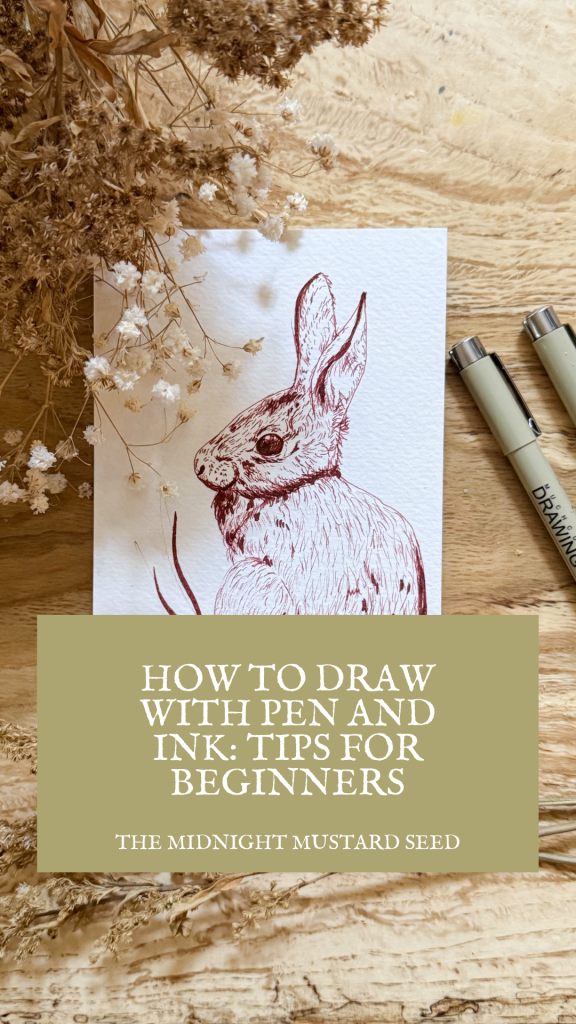
• Nature: Sketch a gnarled tree with hatching for bark texture or a flower with circular patterns for petals. I captured a wick sketch of a wild rabbit in our yard which I I had a blast with!
• Urban Scenes: Capture a bustling street with fineliner pens for details like windows and brush pens for bold shadows.
• Everyday Objects: Draw a teacup or a pair of glasses, using varied line weights to highlight curves and reflections.
For your next sketch, try a scene from your daily life—a coffee mug on your desk or a view from your window. These familiar subjects are perfect for practicing ink techniques.
Adding Final Touches
Once your ink sketch is nearly complete, it’s time for the final touches. Step back and evaluate your work. Are the shadows deep enough? Do the lines guide the viewer’s eye? If needed, add a few extra strokes with a brush pen for drama or a fineliner for subtle details. If you’re using waterproof ink, you can even add a light watercolor wash for softer tones and a storybook feel. Tip: Set your drawing aside for a day before adding final touches. Fresh eyes help you spot areas that need a little love.
As you grow as an artist, you’ll develop a go-to system—a combination of tools and techniques that feel like home. Maybe you’ll love the precision of fineliner pens or the expressive freedom of brush pens. Perhaps you’ll combine dip pens for outlines with thick markers for bold fills. The key is to experiment and find what feels true to you.
Here’s a starter kit to get you going:
• Fountain Pen: Pilot Metropolitan (fine nib)
• Brush Pen: Pentel Brush Pen
• Fineliner Pens: Micron (0.3mm and 0.5mm)
• Ink: Waterproof India ink
• Paper: Smooth, heavyweight paper (like Bristol board) to prevent bleeding. I love drawing on Arches watercolor paper.
Ink Drawing Tutorials and Resources
Want to find other art tutorials or handmade inspiration? Check out the craft section of my blog HERE. For hands-on practice, try this challenge: Create one small ink sketch daily for a week. Start with simple subjects and focus on one technique (like hatching or stippling) each day. By the end, you’ll have a collection of drawings and a newfound confidence.
Pen and ink drawing is a journey of discovery, where every line tells a story and every sketch builds your skills. Whether you’re wielding a fountain pen, a brush pen, or a humble fineliner, the key is to experiment, embrace imperfections, and have fun. The main thing is to keep drawing—your next masterpiece is just a stroke away.So, grab your pens, start with a pencil sketch, and let your creativity flow. The world of ink drawings is waiting for you to leave your mark. Happy sketching!
Blessings,
Samm